
The history of Moroccan rugs is the story of the Amazigh (Berber) people: mountain families who turned wool into warmth, art and identity. From tent floors in the Atlas Mountains to the living rooms of famous modernist architects, these rugs have travelled an incredible journey. Here is that story told in 5 eras, and why it still matters when you choose a rug today.
Table of Contents
- Era 1: Ancient Roots of Berber Weaving
- Era 2: Rugs for Life, Not for Sale
- Era 3: The Women Behind the Loom
- Era 4: Urban Carpets and Regional Styles
- Era 5: Discovery by Modern Design
- Moroccan Rugs in Culture and Daily Life Today
- The Future: Preserving the Craft
- Why This History Matters When You Buy
- History of Moroccan Rugs FAQ
- Bring a Piece of History Home
Era 1: Ancient Roots of Berber Weaving
The Berbers, or Amazigh, are the Indigenous people of North Africa. Their weaving traditions are ancient, developed long before modern borders existed. Because textiles are fragile and decay over time, very old rugs rarely survive, so much of the early history of Moroccan rugs has been passed down orally rather than through objects. What we do know is that weaving was central to daily life: sheep provided wool, and wool provided shelter, clothing and bedding.
Era 2: Rugs for Life, Not for Sale
For centuries, Berber rugs were made for family use. In the cold Atlas Mountains, thick pile rugs served as mattresses, blankets and floor coverings. In warmer regions, lighter flat weaves were used as blankets, tent dividers and saddle cloths. Rugs also played a role in key moments of life: a young woman might weave pieces for her dowry, and rugs were used in weddings, births and celebrations.
Era 3: The Women Behind the Loom
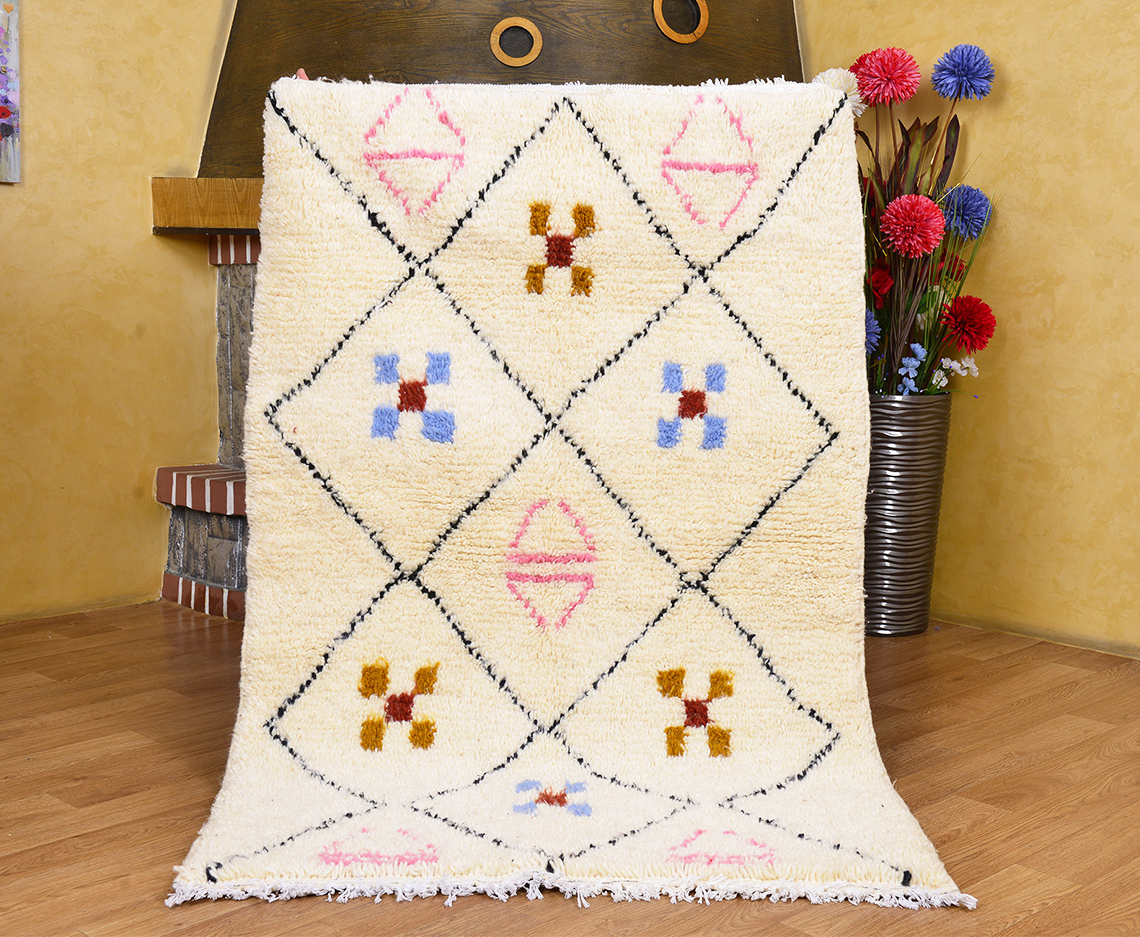
Weaving has always been mostly women’s work in Berber communities. Girls learned from their mothers and grandmothers, memorizing techniques and motifs. Each weaver added her own touch, which is why no two rugs are alike. The rugs became a way for women to express beliefs, emotions and experiences through symbols, a language explored in our guide to Moroccan rug symbols. Learn about the process itself in how Moroccan rugs are made.
Era 4: Urban Carpets and Regional Styles
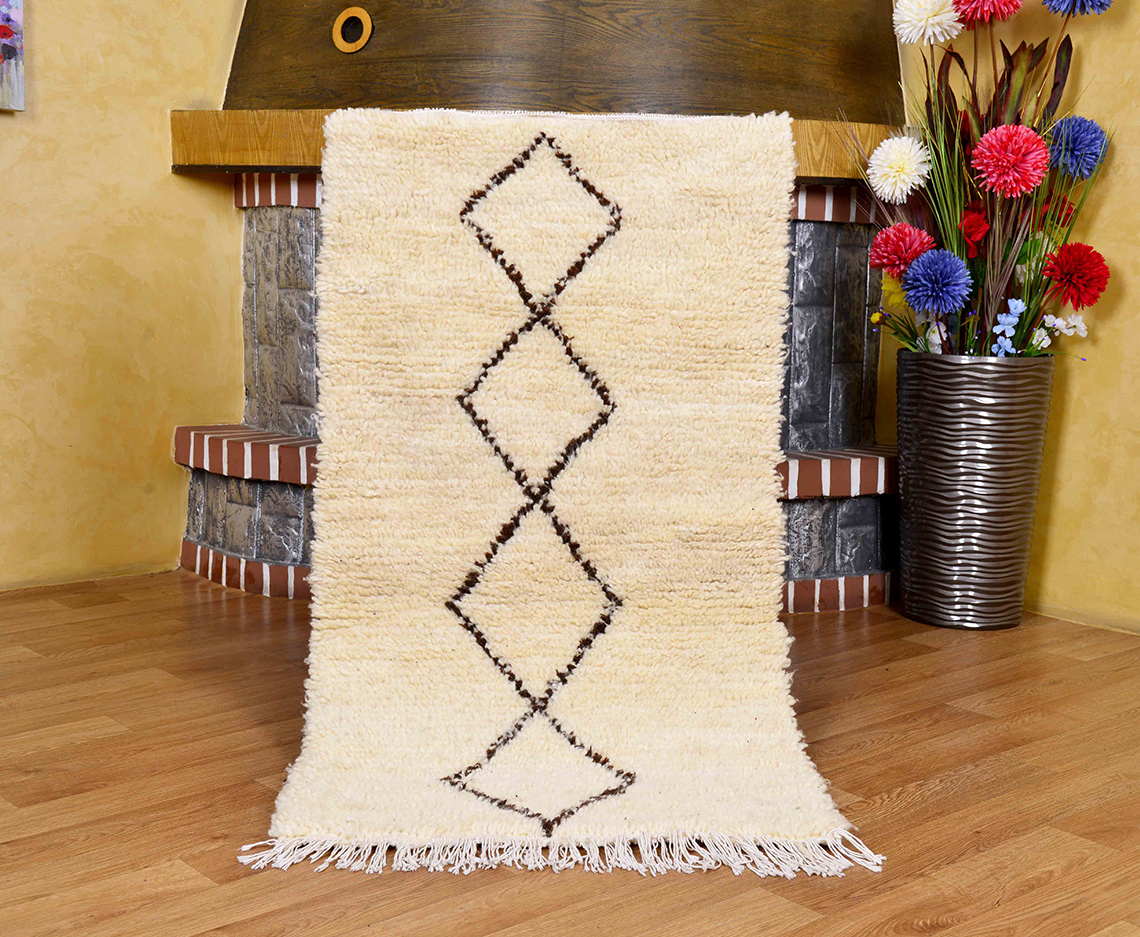
Alongside rural tribal rugs, Moroccan cities such as Rabat developed their own carpet traditions, influenced by trade and Middle Eastern carpet design, with denser knotting and more formal layouts. Meanwhile, each rural region kept its own identity: thick ivory Beni Ourain in the Middle Atlas, colorful Azilal in the High Atlas, warm Boujad in the plains and flat kilims across many tribes. In the late 20th century, a new style appeared: the Boucherouite, woven from recycled fabric. Discover them all in types of Moroccan rugs.
Era 5: Discovery by Modern Design
In the 20th century, the history of Moroccan rugs took an international turn. Modernist architects and designers, including Le Corbusier, Alvar Aalto and Charles and Ray Eames, used Berber rugs to bring warmth to their clean, geometric interiors. The contrast between handmade texture and modern lines was perfect. Later, the bohemian movement of the 1960s and 1970s embraced colorful Moroccan textiles. Since then, Moroccan rugs have influenced contemporary rug design worldwide, inspiring countless “Moroccan style” patterns.
Moroccan Rugs in Culture and Daily Life Today
In Morocco, rugs are still part of daily life: on floors, on walls, for prayer, for guests and in celebrations. Many women weave through cooperatives that help them reach international buyers, providing income and independence in rural areas. For Moroccan families, a rug can be an heirloom passed from one generation to the next.
The Future: Preserving the Craft
Today the craft faces challenges: young people moving to cities, competition from machine-made imitations and pressure to weave faster. Buying authentic handmade rugs directly from artisans helps keep the tradition alive. It rewards skill, supports fair income and encourages the next generation of weavers. Learn how to recognize real pieces in our authentic Moroccan rug guide.
Why This History Matters When You Buy
Understanding the history of Moroccan rugs changes how you see your rug. It is not just decor. It is a piece of a living culture, a woman’s work and memory, and a craft that survived centuries. That is why a real handmade rug feels different in a room, and why it is worth choosing carefully. Our Moroccan rug guide brings all of this together.
History of Moroccan Rugs FAQ
Who makes Moroccan rugs?
Traditionally, Amazigh (Berber) women in rural Morocco, using skills passed down through generations.
Why did modern designers love Moroccan rugs?
Their handmade warmth and graphic simplicity balanced the clean lines of modernist architecture and furniture.
Are Moroccan rugs still made by hand today?
Yes. Authentic rugs are still hand-knotted or hand-woven by artisans, although many machine-made imitations also exist.
Bring a Piece of History Home
Every rug in our collection continues this story, woven by hand in Morocco from natural wool. Explore the collection and ship it free to the USA.