
Buying an authentic Moroccan rug should feel exciting, not stressful. But with so many machine-made copies labeled “Moroccan style,” it is easy to pay a handmade price for a factory product. The good news: you do not need to be an expert. With 9 simple checks, you can tell a real hand-knotted Berber rug from a fake in a few minutes, whether you are in a shop or looking at photos online.
Table of Contents
- Why Authenticity Matters
- Check 1: Look at the Back
- Check 2: Examine the Fringes
- Check 3: Feel the Wool
- Check 4: Look for Natural Imperfections
- Check 5: The Burn Test (Carefully)
- Check 6: Smell It
- Check 7: Check the Weight
- Check 8: Ask the Right Questions
- Check 9: Be Realistic About Price
- Handmade vs Machine-Made: Key Differences
- Red Flags When Shopping Online
- What About Vintage Rugs?
- Authentic Moroccan Rug FAQ
- Shop With Confidence
Why Authenticity Matters
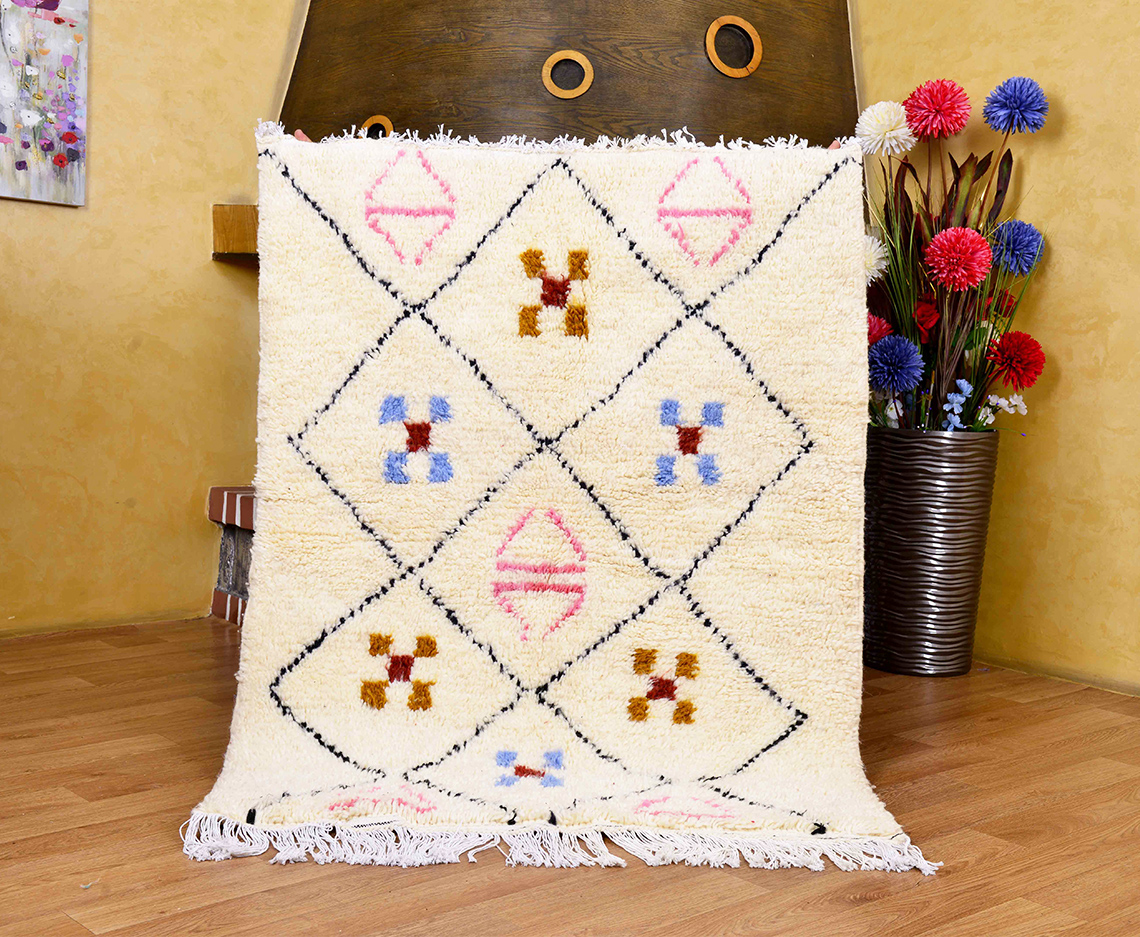
An authentic Moroccan rug is woven by hand, usually by a Berber (Amazigh) woman, from natural wool. It takes weeks or months to make, lasts for decades and often holds its value. A machine-made copy is produced in hours from synthetic fibers, wears out quickly and has no resale value. Knowing the difference protects your money and supports real artisans.
Check 1: Look at the Back
This is the most reliable test. Flip a corner over. On a hand-knotted rug, the pattern on the back mirrors the front, and you can see individual knots, slightly uneven rows and small irregularities. On a machine-made rug, the back is perfectly uniform, often covered with a latex coating or a glued fabric layer.
Check 2: Examine the Fringes
On an authentic Moroccan rug, the fringes are the ends of the warp threads that run through the entire rug. They are part of its structure. On copies, fringes are often sewn or glued onto the edges afterward. Gently pull the fringe: if you can see a stitched seam, it is a sign of machine production.
Check 3: Feel the Wool
Real Berber wool feels soft, springy, warm and slightly oily from natural lanolin. Synthetic fibers like polyester, polypropylene or acrylic feel slippery, plasticky or squeaky. Rub the pile between your fingers and press it down. Wool springs back.
Check 4: Look for Natural Imperfections
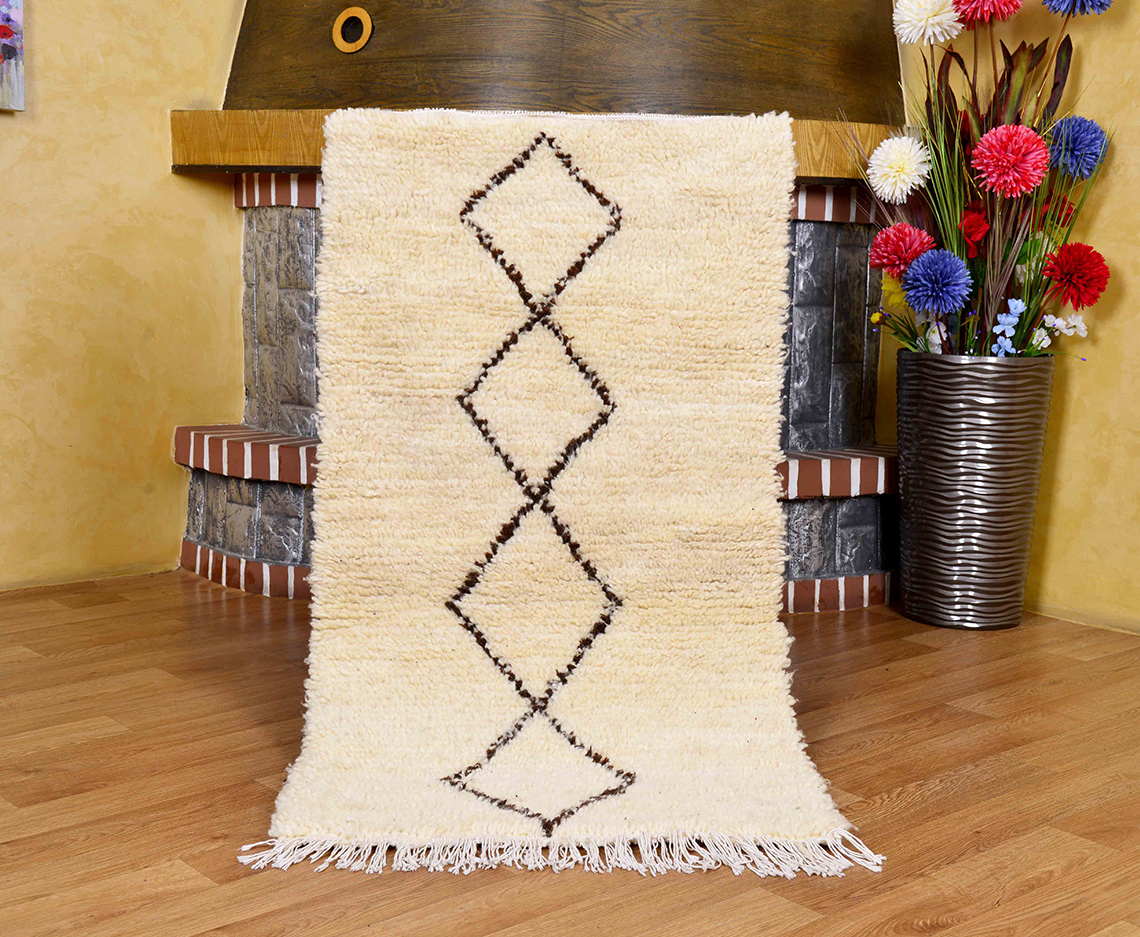
Weavers work from memory without printed patterns. On an authentic Moroccan rug you will notice lines that wobble, motifs that change size, edges that are not perfectly straight and colors that shift slightly (abrash). Perfect symmetry is a warning sign.
Check 5: The Burn Test (Carefully)
If you have a loose fiber, you can test it safely over a sink. Wool burns slowly, smells like burnt hair and turns into a crumbly ash. Synthetic fibers melt, drip, smell of plastic and form hard beads. Never try this on the rug itself.
Check 6: Smell It
New wool has a light, natural, earthy smell. Synthetic rugs often smell of chemicals or glue, especially when new.
Check 7: Check the Weight
Hand-knotted wool rugs are heavy for their size, especially thick styles like a Beni Ourain rug. A very light shag rug is likely synthetic.
Check 8: Ask the Right Questions
Ask the seller: Who wove this rug and where? What is it made of? How long did it take? Is it new or vintage? A trustworthy seller answers clearly and shows real photos of the exact rug, including the back.
Check 9: Be Realistic About Price
A large hand-knotted rug takes a weaver many weeks. If a 5×8 ft “authentic Moroccan rug” costs less than a typical restaurant dinner for two, it is almost certainly machine-made. Our Moroccan rug price guide explains fair price ranges.
Handmade vs Machine-Made: Key Differences
- Material: natural wool vs synthetic fibers.
- Back of the rug: visible knots and pattern vs uniform or glued backing.
- Fringes: structural warp ends vs sewn-on trim.
- Design: unique and slightly irregular vs perfectly repeated.
- Lifespan: decades vs a few years.
- Value: holds value vs loses value quickly.
Red Flags When Shopping Online
- Stock photos or only one blurry image.
- No information about materials.
- Words like “Moroccan style,” “Berber design” or “inspired” without “hand-knotted.”
- Dozens of identical rugs in the same pattern and size.
- No way to contact the seller.
Read our complete guide on how to buy a Moroccan rug to shop safely.
What About Vintage Rugs?
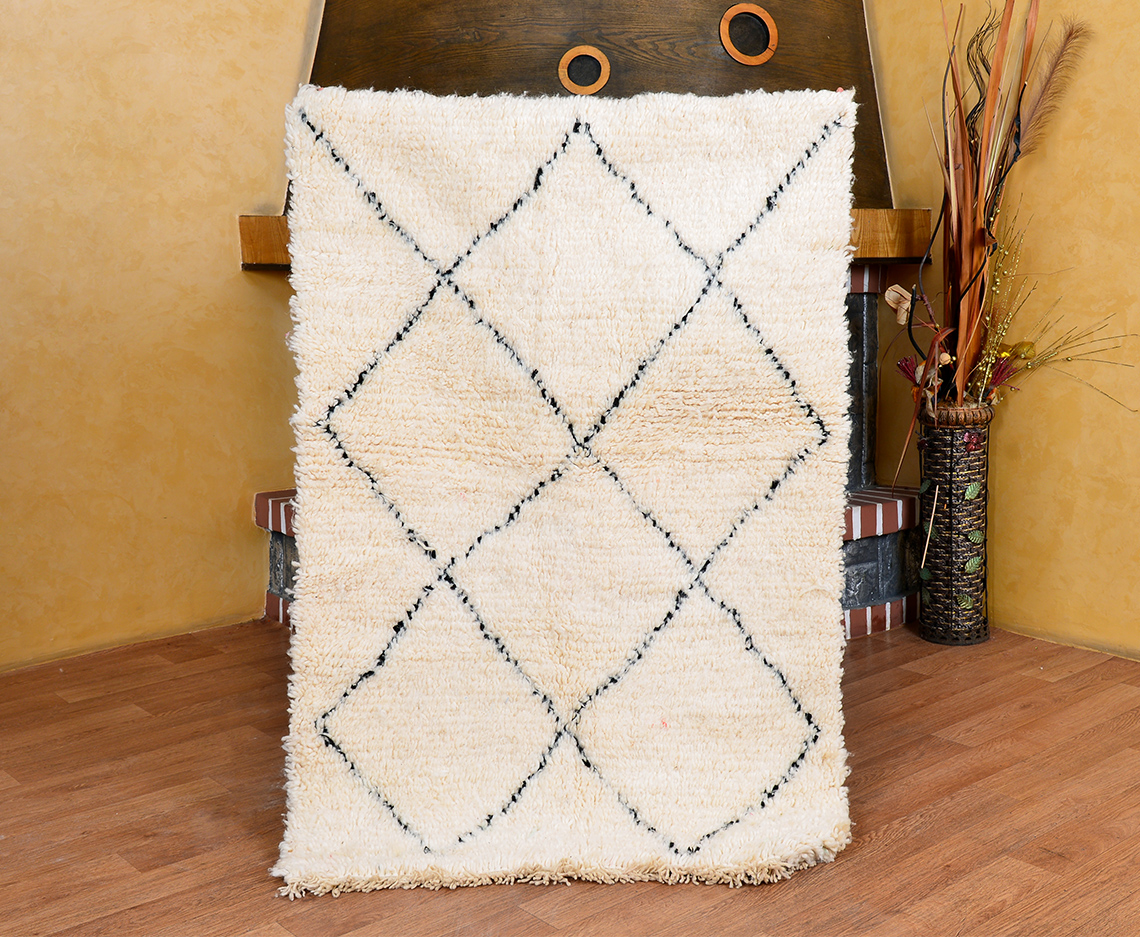
Vintage pieces add another layer: you also want to know the rug’s real age and condition. Look for natural wear and softened wool, and ask about repairs and washing. Our vintage Moroccan rug guide covers this in detail.
Authentic Moroccan Rug FAQ
How do I know if my Moroccan rug is real?
Check the back for visible knots, make sure the fringes are part of the warp, feel for soft natural wool and look for small handmade irregularities.
Are all Moroccan rugs handmade?
No. Many rugs sold as “Moroccan” are machine-made elsewhere. Only hand-knotted or hand-woven rugs from Morocco are authentic.
Why are authentic Moroccan rugs expensive?
Each one is made by hand from natural wool over weeks or months. You pay for skill, time, quality materials and a rug that lasts a lifetime.
Shop With Confidence
Every authentic Moroccan rug in our collection is handwoven by Berber artisans in Morocco from natural wool, photographed individually and shipped free to the USA. Learn more in our complete Moroccan rug guide.