
Have you ever wondered how Moroccan rugs are made? Behind every handwoven Berber rug are weeks or months of patient work, from shearing sheep in the mountains to tying the very last knot. In this guide, we walk you through the 8 fascinating steps of the process, the tools weavers use and the women who keep this craft alive.
Table of Contents
- Who Makes Moroccan Rugs?
- Step 1: Shearing the Sheep
- Step 2: Washing the Wool
- Step 3: Carding and Spinning
- Step 4: Dyeing
- Step 5: Setting Up the Loom
- Step 6: Knotting or Weaving
- Step 7: Cutting the Pile
- Step 8: Finishing and Washing
- How Long Does It Take?
- Tools of the Weaver
- The Role of Women in Rug Making
- How Moroccan Rugs Are Made FAQ
- Own a Rug Made by Hand
Who Makes Moroccan Rugs?
Most authentic rugs are woven by Amazigh (Berber) women in rural villages of the Atlas Mountains and surrounding regions. The skill is learned at home: girls watch their mothers and grandmothers, then start with small pieces before weaving full rugs. Many women now work through cooperatives, which help them earn fair income and reach buyers around the world.
Step 1: Shearing the Sheep
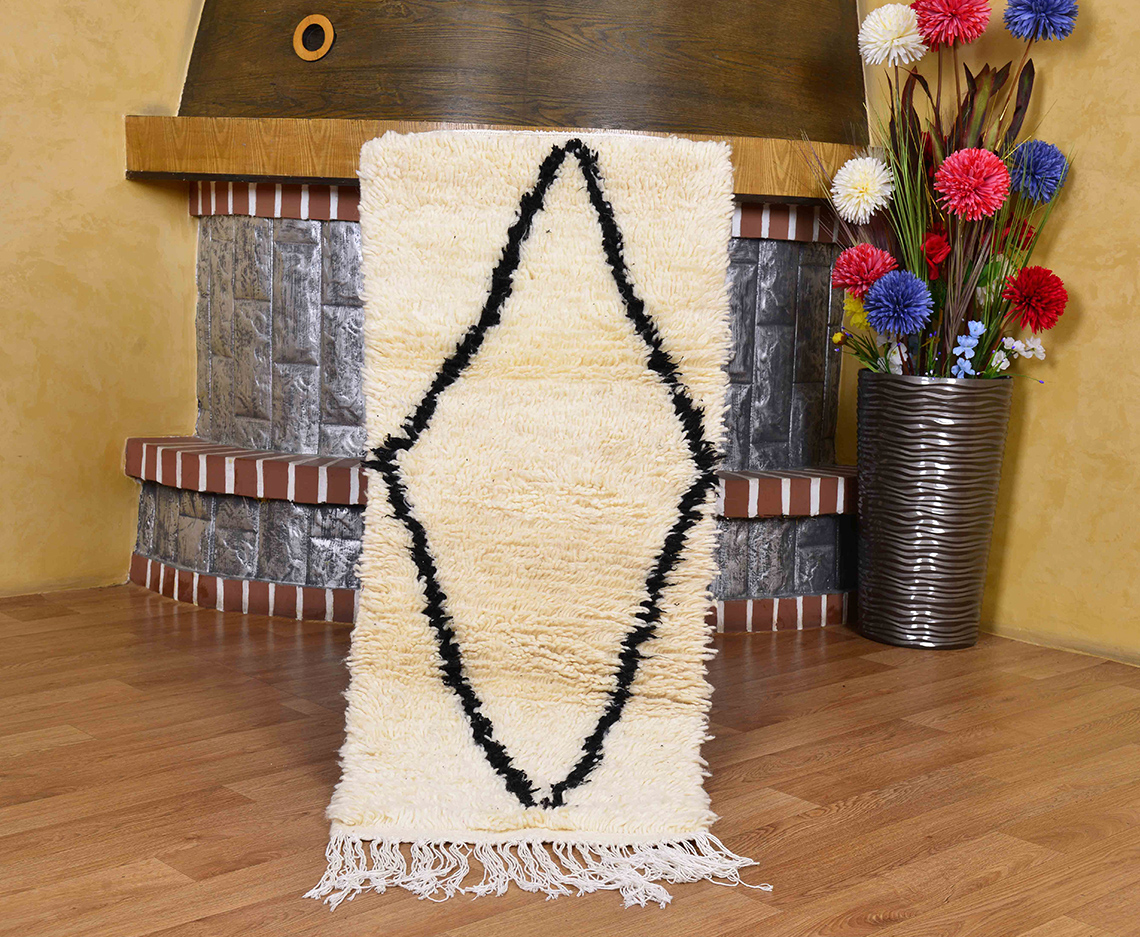
Understanding how Moroccan rugs are made always starts with one thing: wool. In spring, sheep raised in the mountains are sheared. High-altitude sheep grow thick, lanolin-rich fleece to survive cold winters, which makes Moroccan wool soft, durable and naturally stain-resistant.
Step 2: Washing the Wool
Raw wool is full of dirt and plant matter. It is washed by hand, often in rivers or large basins, then dried in the sun. Weavers keep some natural lanolin in the wool, which helps repel water and stains.
Step 3: Carding and Spinning
The clean wool is carded with wire brushes to untangle the fibers and align them. Then it is spun into yarn, traditionally with a hand spindle. Hand-spun yarn has small variations in thickness that give handmade rugs their organic texture.
Step 4: Dyeing
For colorful rugs, the yarn is dyed. Traditional dyes come from nature: madder root and henna for reds, indigo for blue, saffron and pomegranate skin for yellows, and walnut for browns. Today many weavers also use stable modern dyes. Undyed rugs, like the classic Beni Ourain rug, keep the natural colors of the sheep.
Step 5: Setting Up the Loom
Moroccan rugs are woven on vertical looms, often built from wood at home. The weaver stretches strong warp threads, usually wool or cotton, between the top and bottom beams. These threads form the backbone of the rug and later become the fringes.
Step 6: Knotting or Weaving
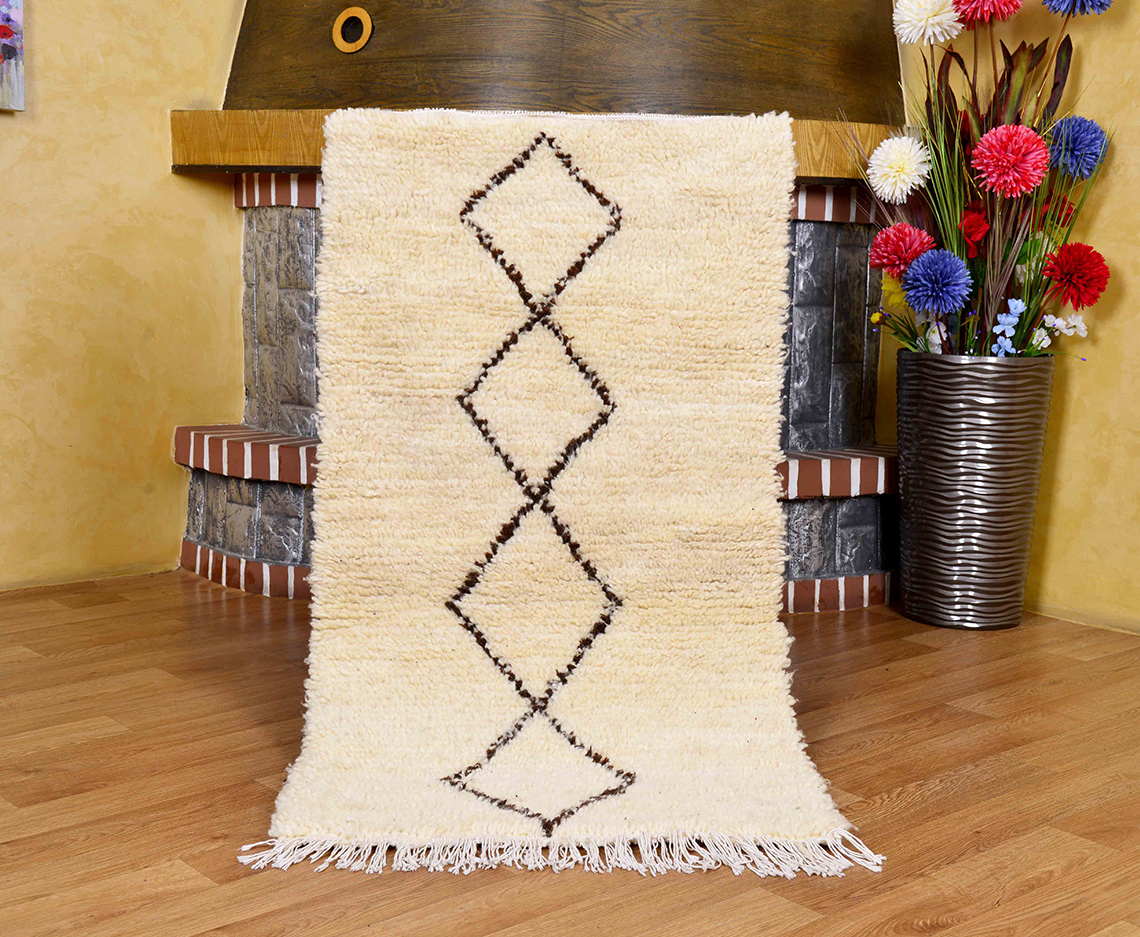
This is the heart of how Moroccan rugs are made. For pile rugs, the weaver ties a knot of wool around two warp threads, cuts it, and repeats, thousands of times. After each row, she passes a weft thread across and beats it down with a heavy metal comb to pack the knots tightly. For flat-woven rugs, like a Moroccan kilim rug, colored weft threads are woven through the warp without knots.
The design is created from memory. Weavers rarely use drawings, which is why each rug is unique and full of personal Moroccan rug symbols.
Step 7: Cutting the Pile
As the rug grows, the weaver trims the pile with scissors or a knife to an even height: long for shaggy Beni Ourain rugs, shorter for Azilal rugs. Some weavers do a final trim when the rug is finished.
Step 8: Finishing and Washing
When the last row is complete, the rug is cut from the loom. The warp ends are tied into fringes, the edges are secured and the rug is washed to remove dust and loose fibers. It is then dried in the sun and is ready for its new home.
How Long Does It Take?
Time is a big part of how Moroccan rugs are made, and it depends on size, density and complexity. A small rug might take one to two weeks. A large, dense rug can take one woman two to four months or more. When you understand how Moroccan rugs are made, the value of a real handmade piece becomes clear.
Tools of the Weaver
- Vertical loom: the wooden frame holding the warp.
- Carding brushes: to prepare the wool.
- Spindle: to spin yarn by hand.
- Beater comb: a heavy metal comb to pack rows tightly.
- Knife or scissors: to cut knots and trim the pile.
The Role of Women in Rug Making
Women are at the center of how Moroccan rugs are made. Weaving gives many rural women independence and income, and it preserves cultural memory. Each rug records a woman’s skill, imagination and life experience. Supporting authentic handmade rugs helps sustain these communities. Read the bigger story in the history of Moroccan rugs.
How Moroccan Rugs Are Made FAQ
Are Moroccan rugs really handmade?
Authentic ones are, from spinning to knotting. Machine-made imitations also exist, so check with our authentic Moroccan rug tips.
What wool is used in Moroccan rugs?
Mainly local sheep wool from the Atlas Mountains, sometimes with cotton for the warp or background.
Why do handmade rugs have irregularities?
Because they are made by hand from memory, small variations in lines and colors are natural signs of craftsmanship.
Own a Rug Made by Hand
Now that you know how Moroccan rugs are made, you can appreciate the work in every knot. Explore our collection of rugs handwoven by Berber artisans, shipped free from Morocco to the USA.