

A Moroccan runner rug is one of the easiest ways to add warmth and character to the narrow spaces of your home. Hallways, kitchens, entryways and landings are often the most overlooked areas, yet they are the first thing guests see and the place you walk through most every day.
In this guide we share 8 practical tips from our weavers on choosing a handmade Moroccan runner: the right size in feet, how to measure, which Berber style fits each space, and how to keep it looking great in a busy American home.
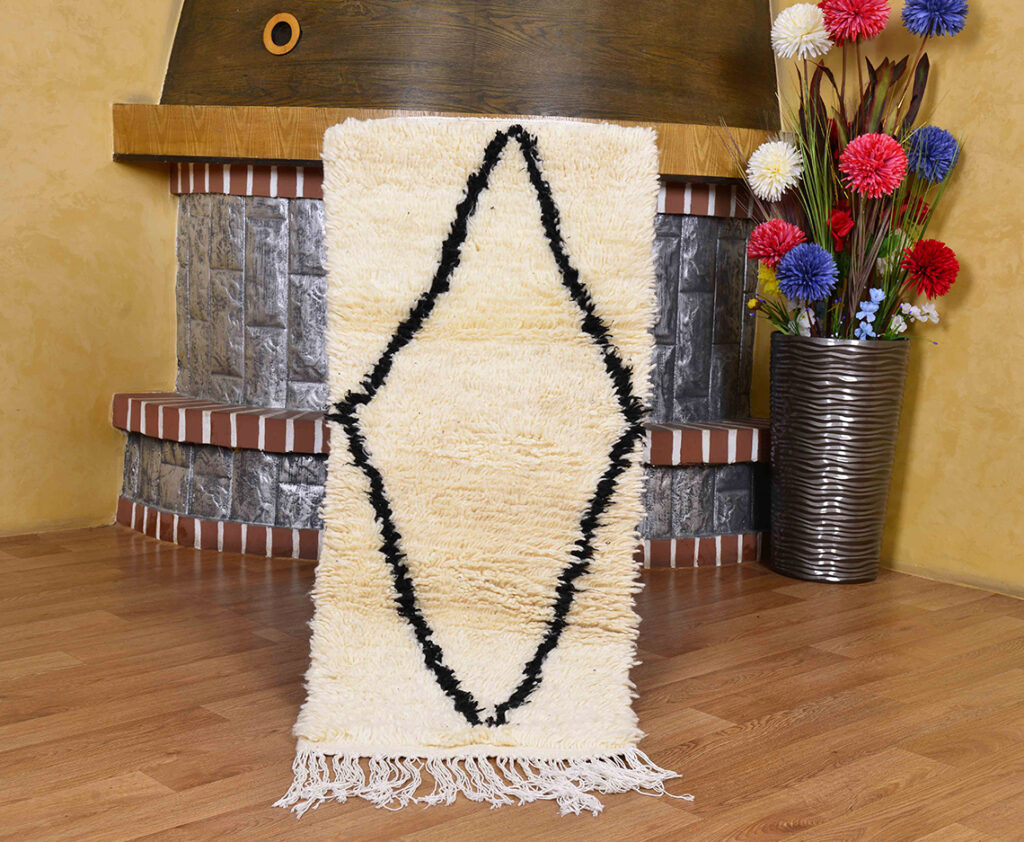
Table of Contents
- What Is a Moroccan Runner Rug?
- Tip 1: Know the Common Runner Sizes in Feet
- Tip 2: Measure Your Hallway the Right Way
- Tip 3: Choose the Pile Height for the Space
- Tip 4: Pick the Right Moroccan Style for Each Room
- Tip 5: Use Runners on Stairs With Care
- Tip 6: Always Use a Non-Slip Rug Pad
- Tip 7: Match the Runner to the Rest of the Home
- Tip 8: Care for Your Runner in a High-Traffic Area
- Need a Runner in a Custom Length?
- Our Final Advice
- Frequently Asked Questions
What Is a Moroccan Runner Rug?
A Moroccan runner rug is a long, narrow Berber rug handwoven in Morocco, usually from natural sheep wool. Runners are made in the same styles as full-size rugs, including Beni Ourain, Azilal, Boujaad and kilim, but in a shape designed for corridors and long spaces. Because each runner is made on a loom by hand, the pattern, color and length are unique to that piece.
New to Berber styles? Our guide to the types of Moroccan rugs explains each one with photos.
Tip 1: Know the Common Runner Sizes in Feet
Most hallway runners in the US are between 2 and 3 feet wide and 6 to 14 feet long. Handmade Moroccan runners vary a little from piece to piece, so always check the exact size listed.
- 2 x 6 ft to 2.5 x 7 ft: short hallways, beside a bed, in front of a kitchen sink
- 2.5 x 8 ft to 2.5 x 10 ft: standard hallways in houses and apartments
- 2.5 x 12 ft and longer: long corridors, galley kitchens, open entry halls
- 3 ft wide or more: wide hallways and grand entryways
For example, our Azilal runner rug (2.4 x 9.8 ft) fits a standard American hallway, while a Boujaad runner (2.3 x 6.2 ft) is ideal for a kitchen or short entry.
Tip 2: Measure Your Hallway the Right Way
Measuring takes two minutes and prevents most mistakes:
- Measure the full length and width of the hallway in feet.
- Leave about 4 to 6 inches of floor visible on each side of the runner.
- Leave 6 to 18 inches of floor at each end, so the runner does not run into walls or doors.
- Check door swings. If a door opens over the runner, a high pile rug may block it, so choose a flatter style.
Example: a hallway 3.5 ft wide and 12 ft long works well with a runner about 2.5 ft wide and 9 to 10 ft long.
Tip 3: Choose the Pile Height for the Space
Pile height matters more in a runner than in a living room rug, because runners take heavy foot traffic and sit near doors.
- Low pile or flatweave (kilim, Boujaad, many Azilal pieces): best for kitchens, entries, stairs and under doors.
- Medium pile: good for hallways and bedrooms.
- High pile (Beni Ourain): very soft and cozy, great beside a bed or in a quiet upstairs hallway.
Tip 4: Pick the Right Moroccan Style for Each Room
Hallway
A colorful Azilal or Boujaad runner turns a plain corridor into a feature. Bold colors also hide everyday dust better than pure white.
Kitchen
Choose a flat, tightly woven runner such as a Moroccan kilim. It is easy to shake out, does not trap crumbs, and stays put in front of the sink or stove.
Entryway
Darker colors and geometric patterns work best where shoes come in from outside. A black and white diamond design looks sharp and forgives dirt.
Bedroom
Place a soft Beni Ourain runner on each side of the bed for a warm first step in the morning. Runners of about 2.5 x 5 ft or 2.5 x 7 ft work well beside a queen or king bed.
Tip 5: Use Runners on Stairs With Care
Moroccan runners can look stunning on stairs, but safety comes first. Use low pile or flatweave runners only, have them installed with stair rods or a professional installer, and never lay a loose rug on steps. Thick, shaggy rugs are not suitable for stairs.
Tip 6: Always Use a Non-Slip Rug Pad
A runner is walked on lengthwise all day, so it moves more than any other rug. A thin felt and natural rubber pad keeps it flat and safe, protects hardwood floors, and adds a little cushion. Cut the pad about 1 inch smaller than the rug on each side so it stays hidden.
Tip 7: Match the Runner to the Rest of the Home
A runner connects rooms, so think about what you see from the hallway. If your living room has a cream Beni Ourain rug, a runner with similar cream wool and a touch of color ties the spaces together. You do not need matching rugs, just one shared color.
Tip 8: Care for Your Runner in a High-Traffic Area
- Vacuum once or twice a week without a beater bar, or on a low setting.
- Rotate the runner end to end every 3 months so it wears evenly.
- Blot spills right away with a clean white cloth and cold water.
- Shake out flatweave kitchen runners outside regularly.
For deeper cleaning, follow our guide on how to clean a Moroccan rug.
Need a Runner in a Custom Length?
Many American hallways are unusually long or narrow. If you cannot find the exact size, we can weave a custom Moroccan runner to your measurements and colors. Just send us your hallway size and a photo of the space.
Our Final Advice
The best Moroccan runner rug is the one that fits your space with a little floor around it, matches how much traffic the area gets, and makes you smile every time you walk by. Measure first, choose low pile for busy spaces and soft pile for quiet ones, and add a good rug pad. Shipping is free across the USA with FedEx tracking, and every order comes with a 14-day return window.
Shop pieces mentioned in this guide:
- Azilal Moroccan runner rug, 2.4 x 9.8 ft
- Boujaad Moroccan runner rug, burgundy medallion
- Berber runner rug, black and red diamond
- Moroccan kilim rugs
Curious about where these designs come from? Learn more about the long history of the Berber carpet in North Africa.
Frequently Asked Questions
What size runner do I need for a hallway?
Choose a runner that leaves 4 to 6 inches of floor on each side and 6 to 18 inches at each end. For most American hallways, that means a runner about 2.5 ft wide and 8 to 10 ft long.
Are Moroccan runner rugs good for kitchens?
Yes. A flat kilim or low pile Berber runner is ideal for kitchens because it is easy to clean and does not trap crumbs.
Can I put a Moroccan runner on stairs?
Only low pile or flatweave runners, and only when they are properly installed. Never place a loose, thick rug on stairs.
Do Moroccan runners slip on hardwood floors?
Without a pad, they can. Use a felt and natural rubber rug pad to keep the runner in place and protect your floor.
Can I order a runner in a custom length?
Yes. We weave custom Moroccan runners to your exact size and colors. Contact us with your measurements to get started.