
If you love color, pattern and personality, the Azilal rug may be the perfect Moroccan rug for you. With its cream background and joyful abstract designs, it feels like a painting you can walk on. Azilal rugs have become one of the most searched Moroccan rug styles in the USA, and for good reason. In this guide we cover 7 things every buyer should know: origin, design, symbols, materials, styling, care and price.
Table of Contents
- 1. Where the Azilal Comes From
- 2. How to Recognize an Azilal
- 3. The Meaning Behind Azilal Designs
- 4. Materials and Construction
- 5. How to Style an Azilal
- 6. Caring for an Azilal
- 7. How Much Does an Azilal Cost?
- Azilal Rug vs Beni Ourain Rug
- Tips for Buying an Azilal Online
- Azilal FAQ
- Find Your One-of-a-Kind Azilal
1. Where the Azilal Rug Comes From
The Azilal takes its name from the Azilal province in the High Atlas mountains of central Morocco. This is a land of steep valleys, red earth and small villages, about three hours from Marrakech. For generations, Berber (Amazigh) women of the region have woven rugs for their own homes, often as part of a bride’s dowry. Each rug was a personal diary, recording events, hopes and beliefs in wool.
Today, weavers in the region still use traditional vertical looms, and many cooperatives help women sell their work directly, providing an important source of income for rural families.
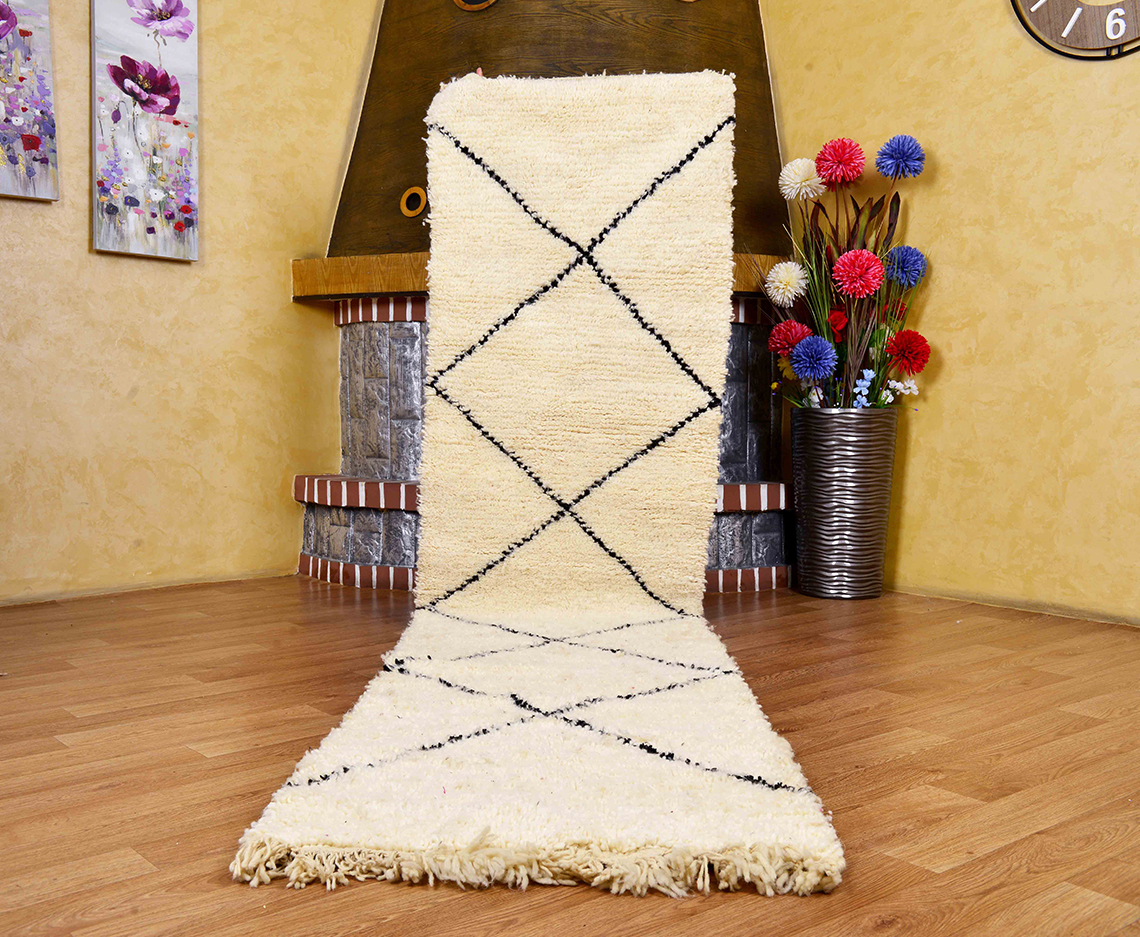
2. How to Recognize an Azilal Rug
An Azilal is easy to spot once you know the signs:
- A natural cream or white wool base.
- Colorful asymmetric motifs in pink, red, orange, saffron, blue, green or purple.
- Abstract, free-flowing designs rather than strict grids.
- A medium-low pile, usually thinner than a Beni Ourain.
- Unique compositions. No two Azilal rugs are the same, because each weaver improvises.
Some modern pieces use a black-and-white palette, which creates a striking graphic look while keeping the playful Azilal spirit. You can see examples in our black and white Moroccan rug ideas.
3. The Meaning Behind Azilal Designs
The motifs on an Azilal rug are a visual language. Diamonds often represent women and fertility. Crosses and eyes protect against bad luck. Zigzags may symbolize water or the path of life. Some weavers include figures of animals, combs, or the hand of Fatima (khamsa) for protection. Because designs are personal, two similar shapes can mean different things to different families. Explore the full symbolism in our guide to Moroccan rug symbols.
4. Materials and Construction
A traditional Azilal is hand-knotted on a cotton or wool warp, with a pile of local sheep wool. Some weavers mix in cotton for the background. The pile is cut fairly short, often around 1 cm, which makes the rug lighter and flatter than the thick shag of a Beni Ourain. That lower pile has a big benefit: it is practical under dining tables and in busy areas, and furniture glides more easily over it.
Colors were historically made from natural dyes: henna, madder root, indigo and pomegranate. Many modern rugs use stable dyes so the colors stay vibrant in sunny American homes.
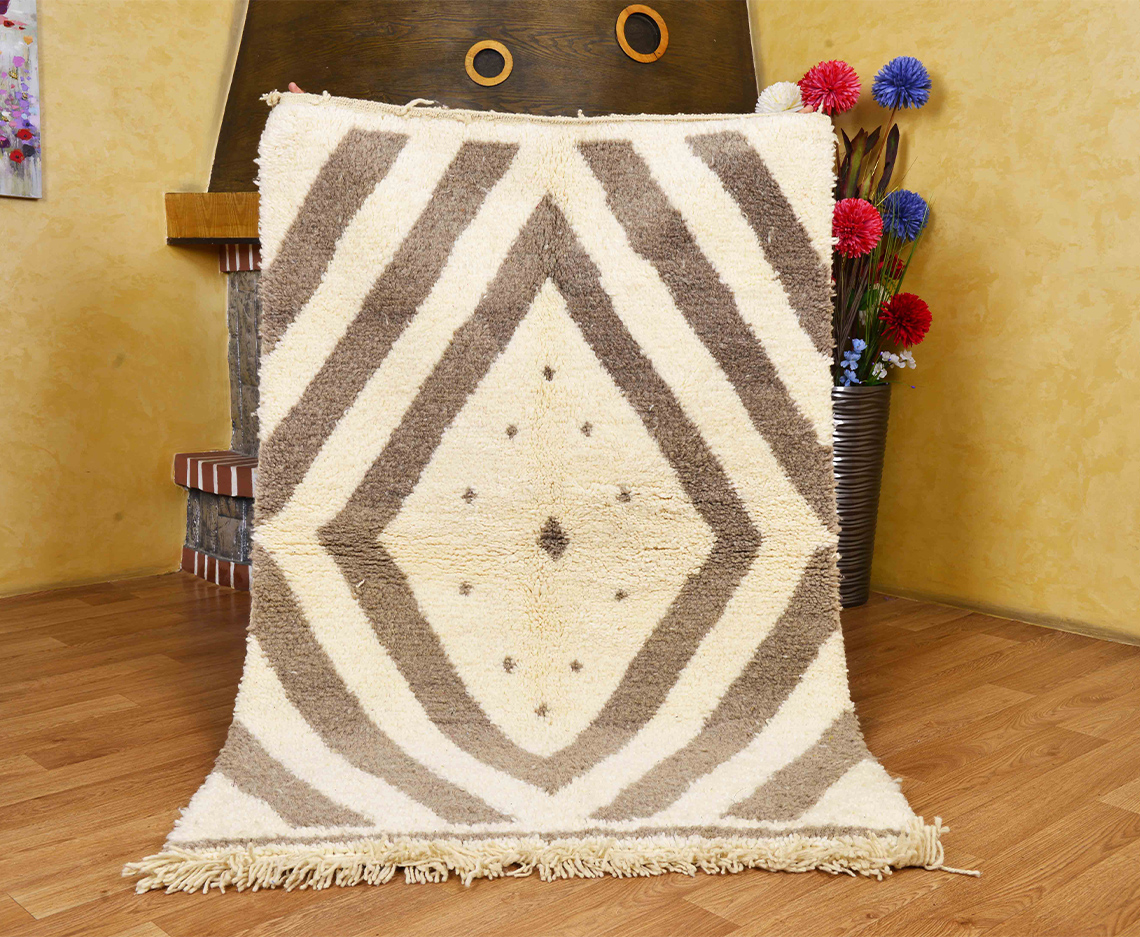
5. How to Style an Azilal Rug
Because each piece is so expressive, an Azilal often becomes the focal point of the room. Here are our favorite ways to use it:
- Living room: let the rug bring color to a neutral sofa and white walls. Pick one or two colors from the rug for pillows.
- Bedroom: place it at the foot of the bed or under the bed for a cheerful, cozy space.
- Kids’ rooms and nurseries: soft wool and playful motifs make it a favorite for children.
- Dining room: the low pile keeps chairs from catching.
- Hallways: an Azilal runner adds instant personality to narrow spaces.
The Azilal works especially well in boho, eclectic, mid-century and modern farmhouse interiors. See more in our boho rug decor ideas.
6. Caring for an Azilal Rug
Wool naturally repels dirt, but colorful rugs deserve extra attention with stains. Vacuum weekly with suction only, rotate the rug every six months to avoid uneven fading, and blot spills with cold water. Never use bleach or hot water, which can make natural dyes bleed. Our complete guide on how to clean a Moroccan rug covers everything step by step.
7. How Much Does an Azilal Rug Cost?
The price of an Azilal depends on size, density, wool quality and the complexity of the design. Runners and small rugs often start in the few-hundred-dollar range, while large rugs for living rooms cost more because they can take months to weave. Vintage Azilal pieces are rarer and can be priced higher. Visit our Moroccan rug price guide to understand what is fair.
Azilal Rug vs Beni Ourain Rug
Both are hand-knotted Berber rugs with a cream base, but they feel very different. The Beni Ourain is thick, minimal and graphic, with dark lines on ivory. The Azilal is thinner, colorful and artistic. If you want calm neutrality, choose a Beni Ourain. If you want joy and color, choose an Azilal. Read the full comparison in Beni Ourain vs Azilal.
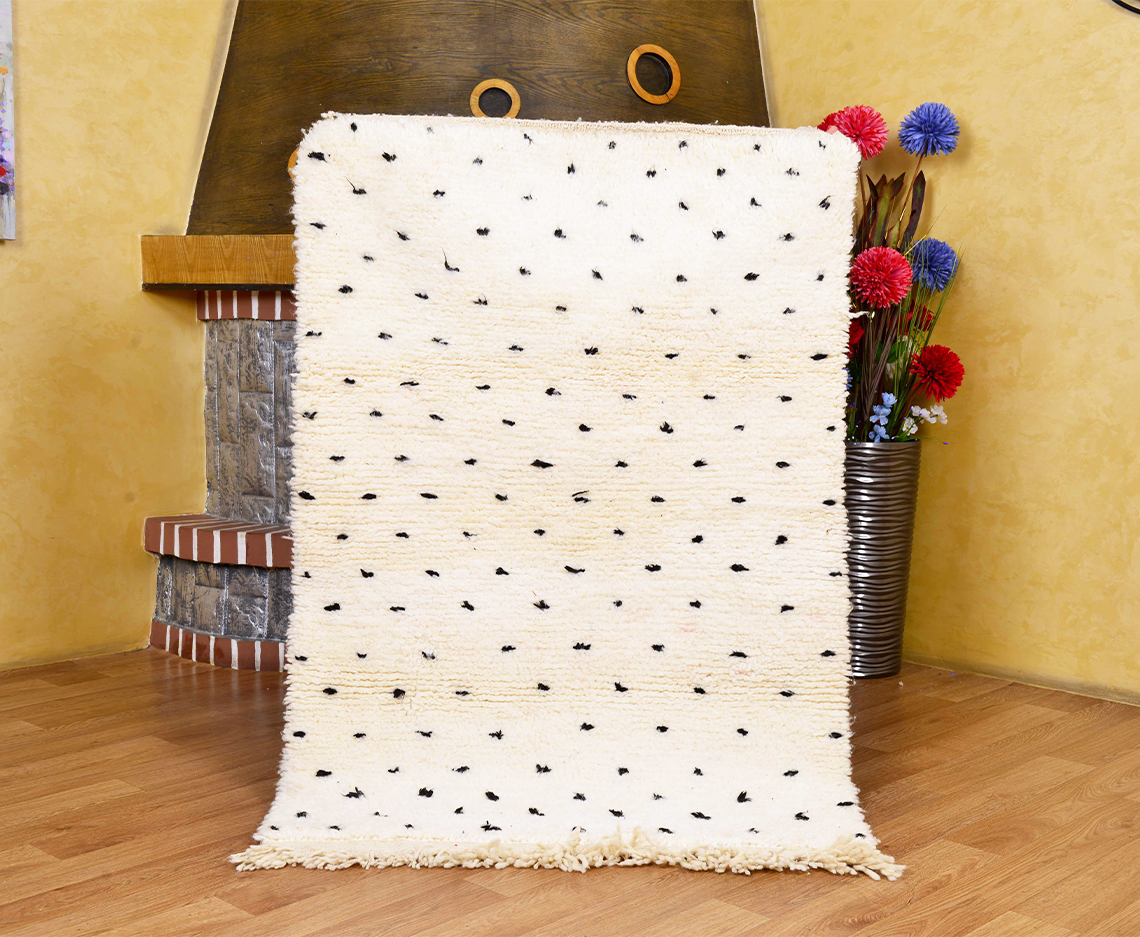
Tips for Buying an Azilal Rug Online
- Ask for photos of the front and back, and an exact size in feet.
- Check that the colors in the photos match natural daylight.
- Make sure it is hand-knotted, not printed or machine-made.
- Buy from a seller who works with Moroccan weavers and ships securely to the USA.
More advice in our guide on how to buy a Moroccan rug.
Azilal Rug FAQ
Are Azilal rugs good quality?
Yes. A genuine Azilal rug is hand-knotted from natural wool and can last for decades with simple care.
Do Azilal rugs shed?
Like any new wool rug, an Azilal may shed a little in the first months. Gentle vacuuming solves it.
Can I use an Azilal rug in a high-traffic area?
Yes. The lower pile and dense wool handle traffic well, especially in hallways and dining rooms.
Find Your One-of-a-Kind Azilal Rug
Every Azilal is a unique story told by a woman in the High Atlas. When you bring one home, you bring her art and her culture into your daily life. Explore our collection of handwoven Azilal rugs, shipped free from Morocco to your door.