
A Moroccan kilim rug is the lightweight, flat-woven sibling of the famous shaggy Berber rugs. Thin, durable and often reversible, it is one of the most practical handmade rugs you can buy, and its bold geometric patterns look amazing in modern American homes. Here are 8 brilliant reasons to choose a flatweave, plus everything you need to know about styles, care and buying.
Table of Contents
- What Is a Moroccan Kilim Rug?
- 1. It Is Thin and Lightweight
- 2. It Is Extremely Durable
- 3. Many Kilims Are Reversible
- 4. Furniture and Doors Glide Over It
- 5. Bold Geometric Patterns
- 6. Easy to Clean
- 7. Perfect for Layering
- 8. Often More Affordable
- Where to Use a Moroccan Kilim Rug
- How to Recognize a Handmade Kilim
- Kilim vs Pile Moroccan Rugs
- Moroccan Kilim Rug FAQ
- Choose Your Flatweave
What Is a Moroccan Kilim Rug?
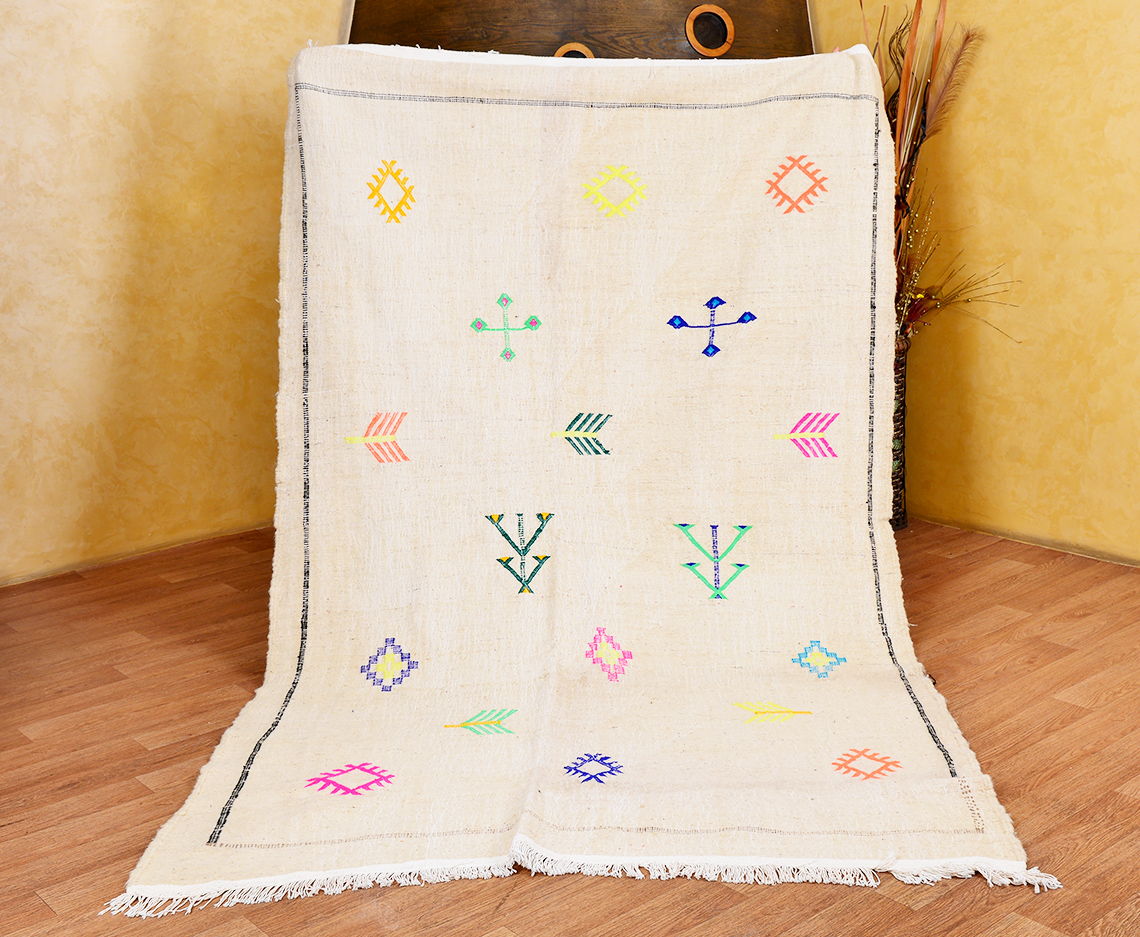
A kilim is a rug made without knots and without pile. Instead of tying wool onto the warp, the weaver passes colored weft threads over and under the warp, packing them tightly to create the design. In Morocco, flat-woven rugs and blankets are also called hanbel. Many Berber tribes weave them, including the Zemmour, Beni Mguild, Glaoua and tribes of the Anti-Atlas.
Traditionally, a Moroccan kilim rug served as a blanket, a wall covering in tents, a saddle cloth or a floor covering in summer. Today it is loved as a modern floor rug and as textile art.
1. It Is Thin and Lightweight
Because there is no pile, a kilim is much lighter than a knotted rug. You can roll it, move it and carry it easily. That makes it perfect for renters, frequent movers and anyone who likes to change their decor with the seasons.
2. It Is Extremely Durable
Tightly packed weft threads create a strong, dense fabric. A good Moroccan kilim rug handles daily foot traffic in kitchens, hallways and entryways without losing its shape.
3. Many Kilims Are Reversible
On most flatweaves, the design appears on both sides. When one side shows wear or sun fading, flip it over and enjoy a fresh look. This doubles the life of the rug.
4. Furniture and Doors Glide Over It
No pile means chairs slide easily, doors open without catching and robot vacuums handle it well. It is a smart choice under dining tables and in busy family spaces.
5. Bold Geometric Patterns
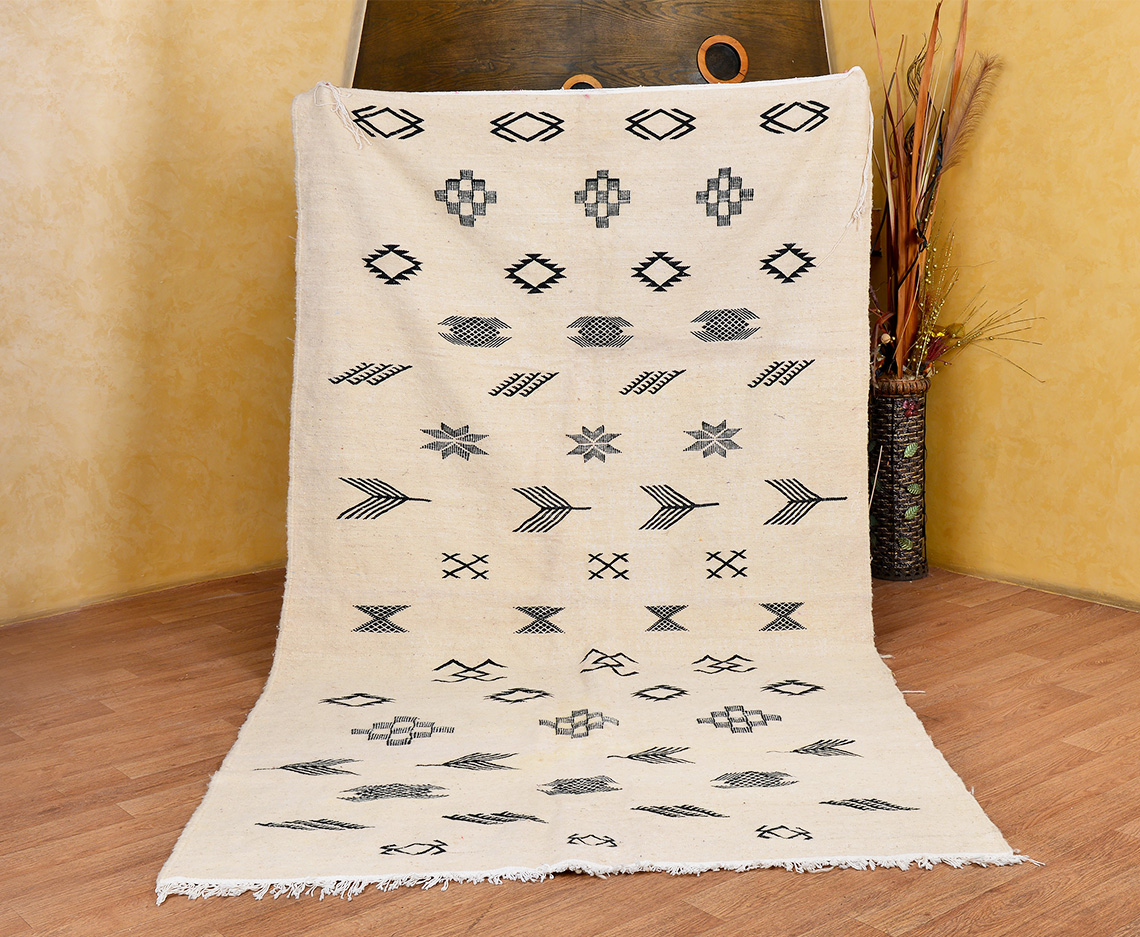
Kilim designs are built from stripes, bands, diamonds, triangles and zigzags, often in red, orange, black, cream and indigo. These graphic motifs suit modern, industrial, mid-century and boho interiors alike. Some weavers mix flatweave with knotted sections and embroidered details, creating rich, textured pieces. Learn what the motifs mean in our guide to Moroccan rug symbols.
6. Easy to Clean
Dust and crumbs sit on the surface instead of sinking into a deep pile. Shake it outside, vacuum both sides and blot spills quickly. Smaller kilims can even be hand-washed at home. Our guide on how to clean a Moroccan rug explains how.
7. Perfect for Layering
A Moroccan kilim rug makes a great base layer. Put a smaller shag rug, such as a Beni Ourain rug, on top for contrast in texture. Or layer a colorful kilim over a large neutral jute rug for a relaxed boho look.
8. Often More Affordable
Flatweaves usually take less time to make than dense pile rugs of the same size, so they are often more affordable. You get a genuine handmade Berber rug for a smaller budget. Compare prices in our Moroccan rug price guide.
Where to Use a Moroccan Kilim Rug
- Kitchen: a runner in front of the sink or counter.
- Hallway and entry: durable and easy to clean.
- Dining room: chairs move freely.
- Bedroom: at the foot of the bed for a pop of color.
- Living room: as a base for layering.
- Wall: hung as a textile artwork.
How to Recognize a Handmade Kilim
Look closely at the edges and the color changes. On a real handwoven kilim, you will see small slits or interlocking where two colors meet, slight irregularities in the lines and warp threads forming the fringes. Machine-made copies look perfectly uniform and often have a printed or glued back. For more tips, read our guide on spotting an authentic Moroccan rug.
Kilim vs Pile Moroccan Rugs
- Thickness: flat vs plush.
- Weight: light vs heavy.
- Comfort: firm underfoot vs soft and cushioned.
- Best for: high-traffic and dining areas vs living rooms and bedrooms.
- Reversible: usually yes vs no.
See all styles in our guide to the types of Moroccan rugs.
Moroccan Kilim Rug FAQ
Does a kilim need a rug pad?
Yes. A thin non-slip pad keeps a flatweave in place, prevents slipping and adds a little cushion.
Are kilim rugs warm?
They are less insulating than thick pile rugs, which makes them ideal for warmer months and sunny rooms.
Can a kilim go outdoors?
Wool kilims are best kept indoors or on covered porches, away from rain and constant direct sun.
Choose Your Flatweave
A Moroccan kilim rug gives you handmade beauty, durability and versatility in a light, easy package. Explore our collection of handwoven kilims, shipped free from Morocco to the USA.