
A Boucherouite rug is one of the happiest objects you can bring into a home. Bursting with color and texture, these Moroccan rag rugs are woven from recycled fabric, which makes every single piece unique and eco-friendly. Collectors and designers in the USA love them for their bold, artistic energy. Here are 7 amazing things to know before you buy one.
Table of Contents
- 1. What Is a Boucherouite Rug?
- 2. A Truly Sustainable Rug
- 3. How It Is Woven
- 4. No Two Are Ever the Same
- 5. Where to Use a Boucherouite Rug
- 6. How to Care for a Boucherouite
- 7. What Does a Boucherouite Cost?
- Boucherouite vs Wool Moroccan Rugs
- How to Pick the Perfect Boucherouite
- The Story Behind Every Piece
- Boucherouite Rug FAQ
- Bring Color Home
1. What Is a Boucherouite Rug?
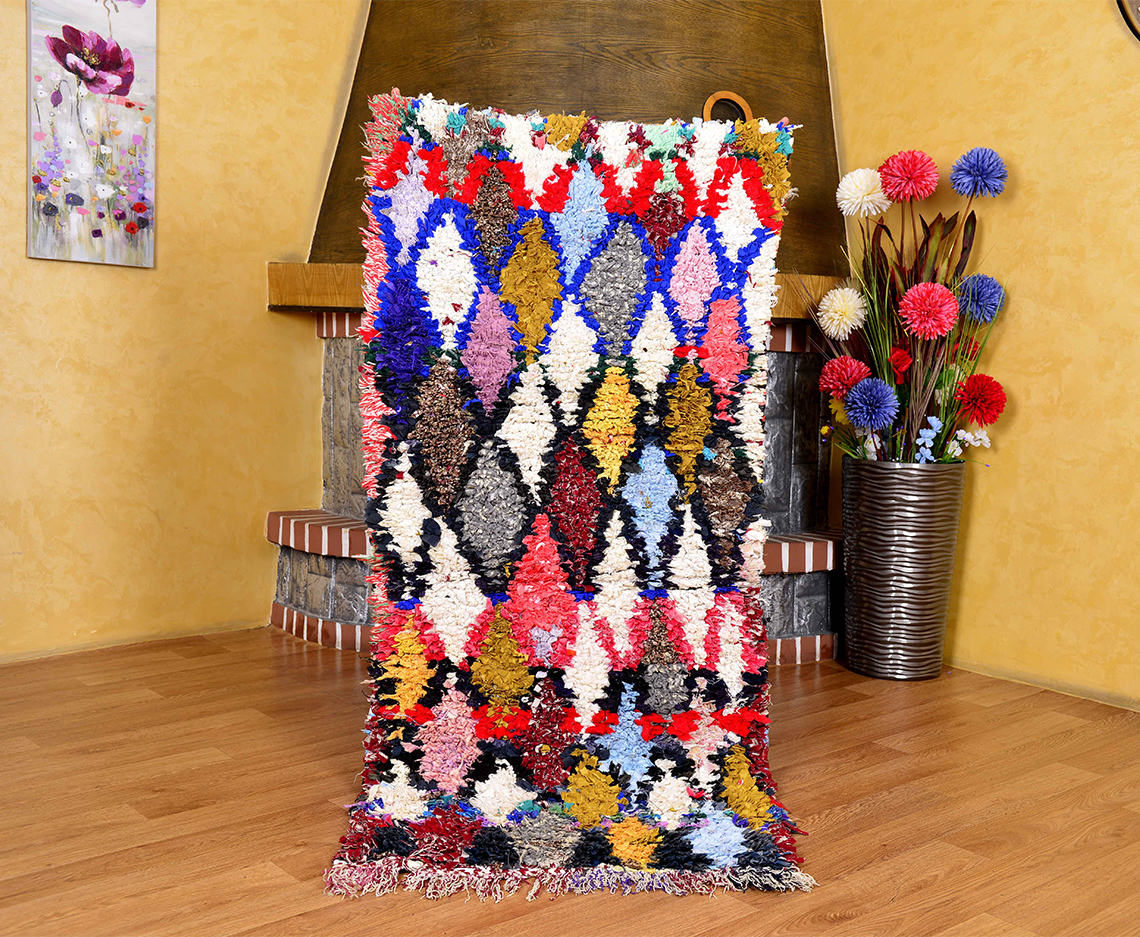
The name comes from the Moroccan Arabic expression “bou sherwit,” roughly meaning “torn and reused clothing.” A Boucherouite is Morocco’s take on the rag rug, woven not from new wool but from strips of old textiles: cotton shirts, wool sweaters, nylon, lycra, even plastic bags in some older pieces. Women in rural villages and city suburbs began making them in the second half of the 20th century, when new wool became expensive and secondhand clothing became widely available.
What began as a practical solution turned into a celebrated art form. Today, vintage and contemporary Boucherouite rugs are exhibited, collected and featured in design magazines.
2. A Truly Sustainable Rug
Because it is made from fabric that would otherwise be thrown away, the Boucherouite is one of the most sustainable rugs in the world. No new fibers are produced, no new dyes are needed, and the weaving is done entirely by hand without electricity. If you care about eco-friendly design, it is hard to find a better choice. Read more in our eco friendly rug guide.
3. How It Is Woven
Weavers cut fabric into long strips, sort them by color and texture, and knot them onto a warp on a traditional loom, the same way wool pile rugs are made. Some pieces are knotted with a shaggy pile, others are flat-woven, and many mix both techniques. The result is a rug with a rich, tactile surface where shiny and matte fibers sit side by side.
4. No Two Are Ever the Same
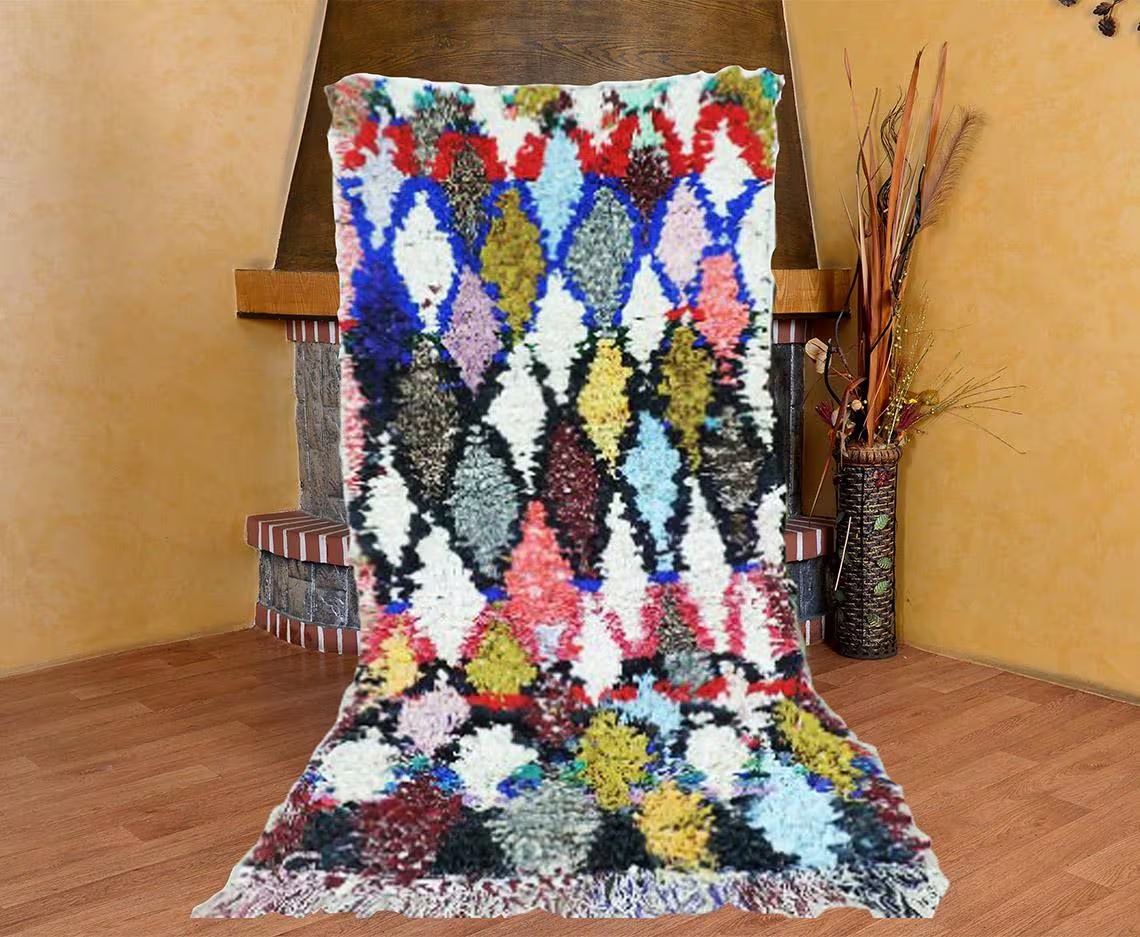
Each Boucherouite rug depends on the fabrics a weaver has on hand. That means unexpected color combinations, abstract shapes and bold improvisation. Some feature diamonds and traditional Berber motifs. Others look like modern abstract paintings, with blocks of hot pink, electric blue, lime green and orange. When you buy one, you own something nobody else in the world has.
5. Where to Use a Boucherouite Rug
These rugs bring instant joy to any space:
- Kids’ rooms and playrooms: colorful, soft and fun.
- Bedrooms: at the foot of the bed or as a bedside rug.
- Boho living rooms: layered over a larger neutral rug.
- Entryways: a small rag rug makes a cheerful welcome.
- Wall hangings: many collectors display them as textile art.
They pair beautifully with white walls, natural wood, rattan and plants. For more inspiration, see our boho rug decor ideas.
6. How to Care for a Boucherouite
Because they are made of mixed fabrics, these rugs need gentle care. Shake them outside regularly to remove dust. Vacuum on low suction without a beater bar. Blot spills quickly with cold water and a little mild soap. Avoid soaking, as mixed materials can dry unevenly. For deep cleaning, choose a professional who handles handmade textiles. Learn more in how to clean a Moroccan rug.
7. What Does a Boucherouite Cost?
Small and medium rag rugs are usually among the more affordable handmade Moroccan rugs, because the raw material is recycled. Large pieces, dense pile rugs and rare vintage examples cost more. Compare prices of other styles in our Moroccan rug price guide.
Boucherouite vs Wool Moroccan Rugs
- Material: recycled textiles vs natural sheep wool.
- Look: wildly colorful and eclectic vs classic and tribal.
- Feel: varied textures vs uniform soft wool.
- Eco impact: upcycled vs natural renewable fiber.
Both are handmade by Berber women and both carry the spirit of Moroccan craft. Compare all styles in our guide to the types of Moroccan rugs.
How to Pick the Perfect Boucherouite
Start with the colors in your room. Choose a rug that repeats one or two shades you already have, such as a pillow, a painting or a plant pot, so it feels connected. Then check the size and the texture. A shaggy piece is cozy for bedrooms, while a flatter one is practical for entryways. Finally, ask for photos in daylight so the colors are accurate.
The Story Behind Every Piece
What makes the Boucherouite special is its story of resourcefulness. Moroccan women turned everyday scraps into warmth for their families, and then into art. Buying one supports that creativity and the artisans who keep it alive. It is a small, beautiful way to bring sustainability and culture into your home at the same time.
Boucherouite Rug FAQ
Are Boucherouite rugs soft?
Pile versions are soft and cozy, while flat-woven versions are thinner. Texture varies because of the mixed fabrics.
Are Boucherouite rugs durable?
Yes. Densely knotted cotton and wool strips are strong, but they are best suited to bedrooms, living rooms and low-to-medium traffic areas.
How do I spell it: Boucherouite or Boucharouette?
Both spellings are used, along with Boucherouette. They all refer to the same Moroccan rag rug.
Bring Color Home
A Boucherouite rug is art, sustainability and Moroccan heritage in one joyful piece. Explore our handpicked collection, woven by artisans in Morocco and shipped free to the USA.